
How to Choose a New Phone for Family in Sudan: A Practical Guide
Buying a new phone for a relative in Sudan is an easier decision than it looks if you follow a few clear steps. Instead of getting lost among dozens of models, start with four questions: who is the phone for, what is the budget, which specifications actually matter in Sudan’s conditions, and how does it arrive safely. This guide answers each question step by step so you can buy with confidence and send through Hurria Street.
Start with who you are buying for
Every person has a different need. A young person who uses social media and the camera needs a different device from an older parent who only wants calls, or a student who needs a good screen for study. Define the person and their use first, because this narrows the choices quickly and stops you from overpaying for specifications that will never be used.
Set a budget that instalments soften
Put an approximate number in mind before you start searching. The advantage is that from the Gulf you can spread the amount across instalments through Tamara or Tabby on any product above AED 500, so a device you thought was out of reach can become affordable once split into payments. Set a comfortable ceiling and stay within it.
The specifications that actually matter in Sudan
Three specifications deserve priority. First, a large battery and fast charging because of power cuts. Second, dual SIM support because many people use more than one network. Third, support for fourth generation networks and enough storage for photos and apps. Beyond that, minor details can be relaxed to save money.
A quick look at the brands
Each brand has a strength. Samsung offers a wide range from budget to flagship. iPhone lasts and holds its value. Huawei brings camera and battery at a competitive price with a different app store. Nokia means durability, simplicity, and lasting battery. Xiaomi and Redmi offer high value at a low price. Choose the brand that serves the person’s need, not just the most famous name.
When comparing two models, a specialist specifications site such as GSMArena helps you see the differences in numbers before you decide.
Check compatibility with Sudan’s networks
Before buying, make sure the device supports the network bands used in Sudan, especially fourth generation. Most global devices support them, but checking is a simple step that saves you from slow internet after the phone arrives. If you are unsure, ask the Hurria Street team before ordering.
How the phone arrives safely
After you choose and pay in the Gulf, Hurria Street delivers the genuine device to your family’s address inside Sudan and hands it to the named person with photo confirmation. Coverage includes Khartoum, Omdurman, and Bahri, and it keeps expanding. The phone moves from your choice to your relative’s hand without you worrying about the road.
It begins with a message from home
Most of these decisions begin with a single message from home. A phone has broken, a screen has cracked, or a student needs something for the new term. You want to act from the Gulf, but you cannot reach across the distance yourself. That distance is exactly what Hurria Street covers, from your checkout to your relative’s hand.
A worked example of paying in instalments
Say you choose a mid range phone. Instead of paying the full amount at once, an instalment plan through Tamara or Tabby splits it into a few smaller payments spread over weeks. The total stays the same, but the monthly load is light. That is often what turns a phone you were hesitating over into one you send today.
Do not forget the accessories
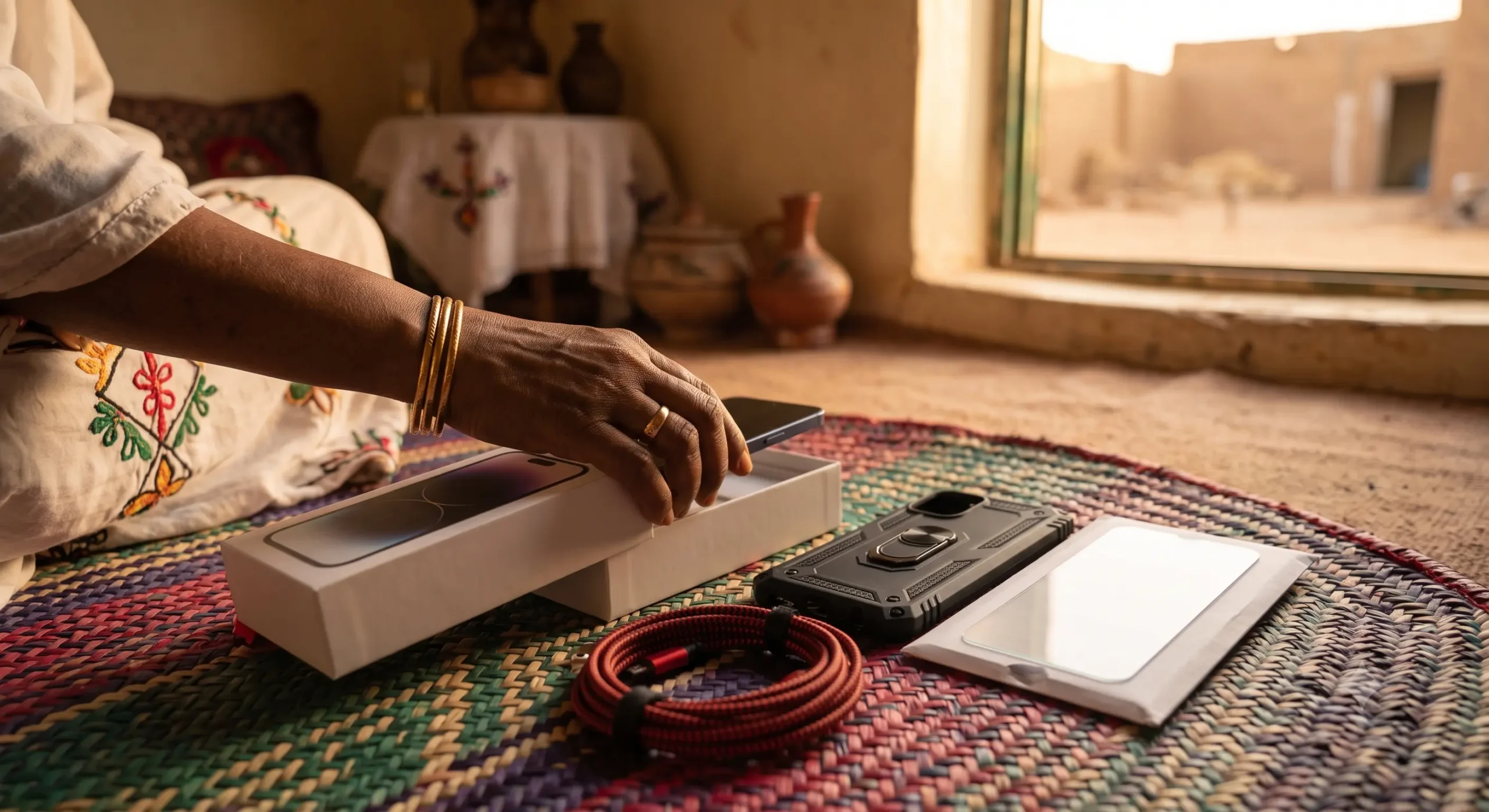
A phone rarely travels alone. A case and screen protector guard your investment, a spare cable saves frustration later, and a memory card adds room on phones that support one. These small additions cost little and make the difference between a phone that lasts and one that gets damaged or fills up in the first few months.
Common mistakes to avoid
Two mistakes recur. Buying purely on brand name rather than the person’s real need, and ignoring the basics like storage and battery. A famous logo means little if the phone does not suit daily life in Sudan. Start from use, then choose the device that fits it best within your budget.
A quick checklist before you buy
Before you confirm an order, run through a short checklist. Does the battery last a full day of normal use? Does it support dual SIM if your relative needs two numbers? Is there enough storage for photos and apps? Does it work on Sudan’s networks, including 4G? Five quick questions like these catch most regrets before they happen.
If you can answer yes to each, the phone is very likely a good fit. If you are unsure about any point, a short message to the Hurria Street team clears it up before you pay, so the device that arrives is the right one from the start.
How to place the order
- Define the person, their use, and the budget.
- Choose the right model on the Hurria Street site.
- Pay with Tamara, Tabby, or card.
- Track the order until your delivery confirmation photo arrives.
Frequently asked questions
What is the most important specification to watch?
Battery and dual SIM first, since they have the greatest effect on daily use inside Sudan.
How do I know the right model for my relative?
Ask about their main use over WhatsApp, and the answer quickly sets the category and budget.
Can I pay in instalments?
Yes. Tamara and Tabby are available on any product above AED 500, alongside card payment.
Will I get proof of delivery?
Yes. You receive a photo of the device with the person who received it.
Is it cheaper to buy in the Gulf or in Sudan?
Buying genuine in the Gulf gives clear pricing and known specifications, away from used or counterfeit devices, and you can pay in instalments.
What accessories should I add?
A case, a screen protector, and a spare cable at least. A memory card helps on phones that support one.
When you start from the person and their need rather than the name and price alone, choosing the new phone becomes easy and right. Define your need, browse the models on Hurria Street, and send one to your family in Sudan.